The cold months bring a narrower palette to the plate. Root vegetables, brassicas, stored legumes, and the last of the season's squash — these are the materials from which a winter diet is largely composed, at least for those who look to what is actually available rather than what has been shipped from elsewhere. How that narrowed palette shapes nutritional variety, portion behaviour, and the broader rhythm of eating across a full winter quarter is the subject of this record.
What the Winter Plate Looks Like
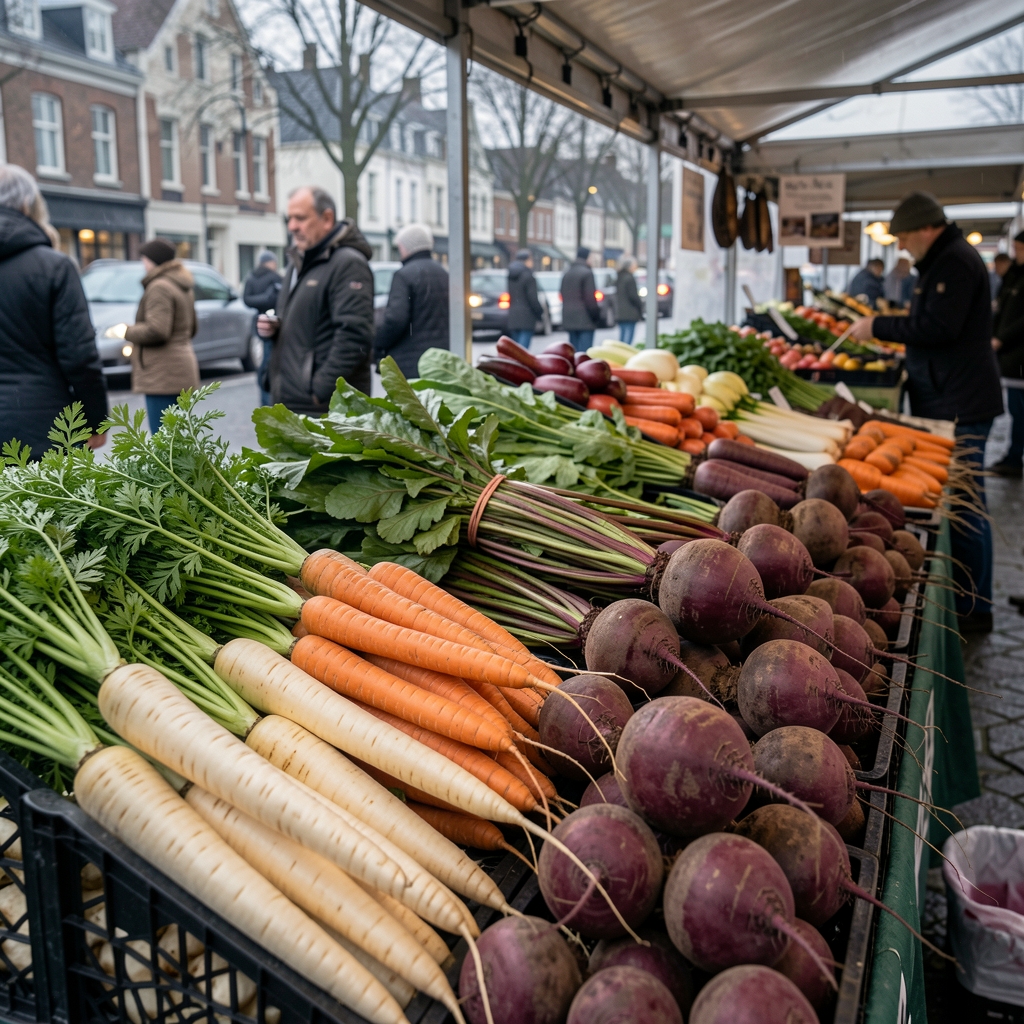
In January, the market stalls along the Exmouth Market stretch in Clerkenwell are a reliable barometer of what the season offers. The table is deep orange and purple, dense with parsnips and beetroot, with celeriac and dark green savoy cabbage at the far end. There is a quality of weight to it — these are heavier vegetables, denser in structure than the bright salad leaves of summer, and they require a different approach in the kitchen.
From a nutritional standpoint, this seasonal shift is not a diminishment. The root vegetables available in winter carry substantial nutrient density: beetroot contributes folate and dietary fibre; parsnip provides potassium and vitamin C; celeriac, often overlooked, is a source of both fibre and B vitamins. Dark leafy brassicas — cavolo nero, kale, Brussels sprouts — are among the most nutrient-dense vegetables available at any time of year. The winter plate, properly composed, is not poorer than the summer plate. It is simply different in character.
The challenge winter presents is not scarcity of nutritional material but narrowness of texture and flavour variety, which has consequences for how much and how attentively we eat. A plate that offers the same dense, roasted character night after night is less engaging than one that varies. Engagement at the table — attention to texture, to flavour, to the specific qualities of a meal — is, as the journal has noted elsewhere, a correlate of portion awareness. When eating becomes routine in the negative sense — automatic rather than attended — portion sizes tend to drift.
The Monthly Rhythm and What It Reveals
Across a twelve-week observation period spanning late November through mid-February, the food journals of four contributors to this publication were examined for patterns related to seasonal produce and eating rhythm. The contributors, all based in London, kept daily records of what they ate, where it came from, and any notes on how the meal was experienced.
What emerged was a monthly rhythm quite distinct from the weekly one described in other pieces in this journal. The month-level pattern showed a clear early-winter adaptation — the first three weeks of November tended to involve a gradual integration of root vegetables and stored legumes into the weekly diet as summer's lighter ingredients receded. By mid-December, the journals showed what might be called a winter plateau: a stable, if somewhat less varied, repertoire of weekly meals that the contributors had settled into.
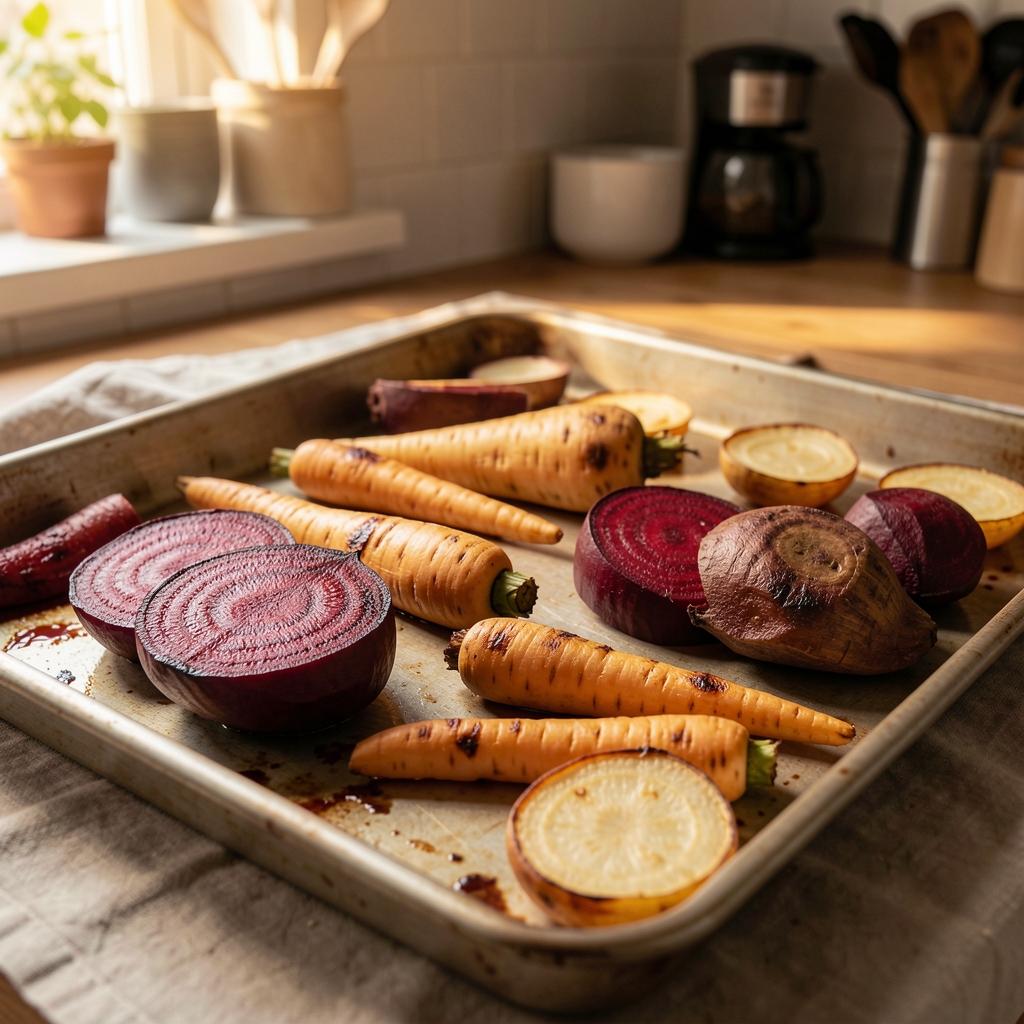
This plateau phase was not nutritionally deficient, but it was marked by reduced experimentation and a higher frequency of repeated meals. The same roasted root combination appeared in two journals on three consecutive weekends. Lentil soup, in several variations, became the default mid-week lunch for all four contributors by January. The nutrition was adequate; the rhythm had become somewhat mechanical.
The significance of this lies in what the journals showed happening to portion sizes and to the quality of attention at meals during the plateau phase. Without making any claim about causality, the records showed a moderate but consistent increase in portion sizes during the plateau weeks, and a decrease in the length and specificity of meal entries — the kind of compression noted in the weekly rhythm piece when describing Wednesday's abbreviated journal entries. When the meal is no longer being observed with fresh attention, the record of it shrinks. And when the record shrinks, the tendency to eat past a natural point of sufficiency appears to increase.
"The narrowed winter palette need not narrow our attention to it. The interest lies not in variety of ingredient but in variety of preparation — in what can be done with parsnip that has not been done with it before."
Seasonal Produce and Nutritional Balance in Practice
The practical question that emerges from this observation is not "how do we get more variety in winter?" but rather "how do we sustain attention to the winter plate?" The two questions feel similar but lead to different responses. The first tends to produce complicated shopping lists and over-ambitious preparation plans that collapse by mid-January. The second leads to a more durable approach: working with the winter vegetable repertoire with genuine curiosity about preparation method, flavour combination, and the specific pleasure of each ingredient.
Celeriac remoulade, for instance, is a preparation that most people have encountered once, if at all, but which rewards attention. The raw vegetable, grated and dressed with a sharp mustard vinaigrette, has a completely different character from the same vegetable roasted. The distinction matters not only for flavour but for how it is eaten: the raw preparation is eaten more slowly, engages more attention at the plate, and tends to produce a clearer sense of having eaten at the end of the meal.
The journal contributors who maintained the most consistent portion awareness through the winter plateau were those whose journals showed the greatest variety of preparation method, even from a narrow ingredient base. One contributor spent five weeks exploring every preparation of the brassica family — raw, steamed, roasted, braised, fermented — recording observations on texture, flavour, and the experience of eating each. Her journal entries remained the longest and most specific of the four throughout the observation period, and her reported sense of sufficiency after meals remained the most consistent.
Fruit in the Winter Quarter
Winter fruit in England is less abundant than autumn or summer, but it is not absent. The citrus season arrives in November and runs through March: blood oranges, clementines, Seville oranges, pink grapefruit. Stored apples — Cox, Braeburn, Russet — remain available through January. Pears are at their best in November and December. Conference pears, in particular, develop a sweetness in storage that makes them one of the most reliably pleasurable fruits of the winter table.
From a nutritional standpoint, the contribution of winter fruit to the daily diet is significant. Citrus provides vitamin C in substantial quantities; apples and pears contribute fibre and a range of phenolic compounds whose role in a well-observed diet has been examined in published nutritional research. More practically, fruit in the winter diet provides the kind of textural and flavour contrast that the predominantly cooked and dense winter vegetable palette tends to lack.
In the observation journals, the contributors who maintained a consistent daily fruit intake through winter — typically one to two pieces, eaten as a mid-morning or mid-afternoon interval — also showed the most consistent overall eating rhythms. The fruit intake appeared to function as a small but reliable anchor in the day: a moment of natural sweetness that reduced the frequency of the kind of opportunistic, unconsidered snacking that tends to fill the gap when no anchor of this kind exists.
Notes on Cooking and the Winter Plate
There is a deeper relationship between cooking from scratch and winter eating that the journal record made visible over the twelve-week period. In the colder months, the barrier to buying prepared food — already somewhat lower than in summer, when fresh food is more immediately available and less preparatory effort seems required — drops further. The warmth of a prepared dish, delivered quickly, competes more effectively with the prospect of cooking when the kitchen is cold and the evening is dark.
The journals showed a clear correlation between home cooking frequency and overall dietary consistency across the winter quarter. The contributors who cooked the most frequently — defined simply as preparing their own meals more than four evenings per week — maintained the most consistent eating patterns across the twelve weeks, with the least variance in portion size and the most consistent nutrient variety. Those who cooked less frequently showed more volatile patterns, with greater swings in both nutritional quality and reported sense of satisfaction with their meals.
This is not a simple argument for cooking over convenience. The circumstances under which people cook — available time, energy, kitchen access, household composition — vary enormously, and the journal record reflects that complexity. But as an observation, the relationship between cooking and eating consistency in winter is clear enough to note: the act of preparing a meal, even a simple one, appears to produce a relationship with its ingredients that carries over into the quality of attention at the table. One eats what one has made with more attention, as a general rule, than what one has simply received.